Quick Summary
Additional Context
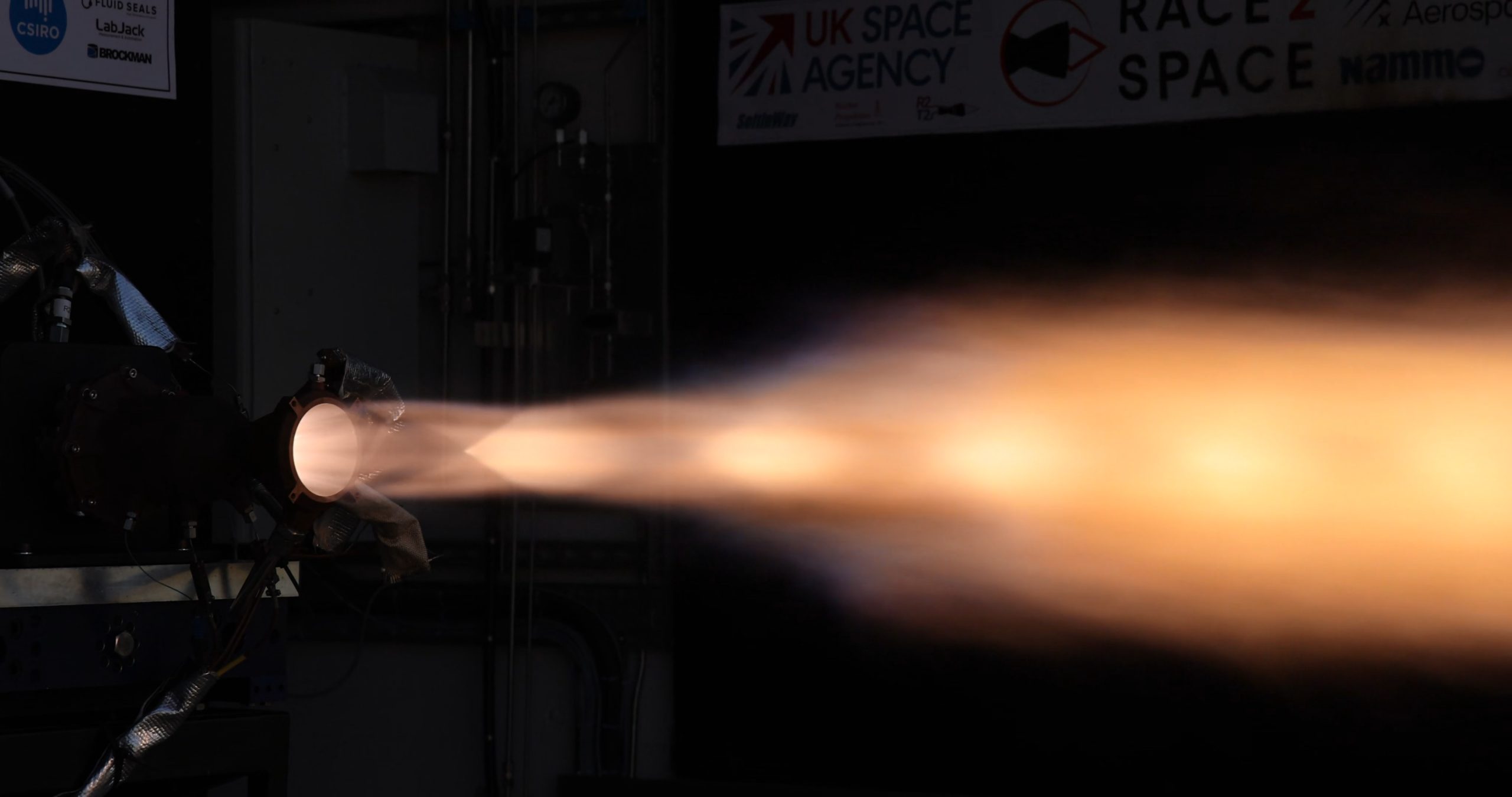
A three-person student team from the University of Melbourne has hot-fired a 3D printed regeneratively cooled liquid bipropellant rocket engine at Race2Space in the UK, taking first place in the competition’s liquid oxygen (LOX) bipropellant category. CSIRO, which supported the build through its Lab 22 additive manufacturing center, says it is the first regeneratively cooled liquid rocket engine an Australian student team has successfully fired at the event.
The engine, nicknamed Slinky, weighs roughly 6 kg and is about the size of a large pineapple. It completed five clean, stable hot fires in a single day, including throttling runs, and reached a maximum thrust of 5.4 kilonewtons, output comparable to a small lunar lander engine.
Slinky was built as an Aerospace and Rocket Engineering