Quick Summary
Additional Context
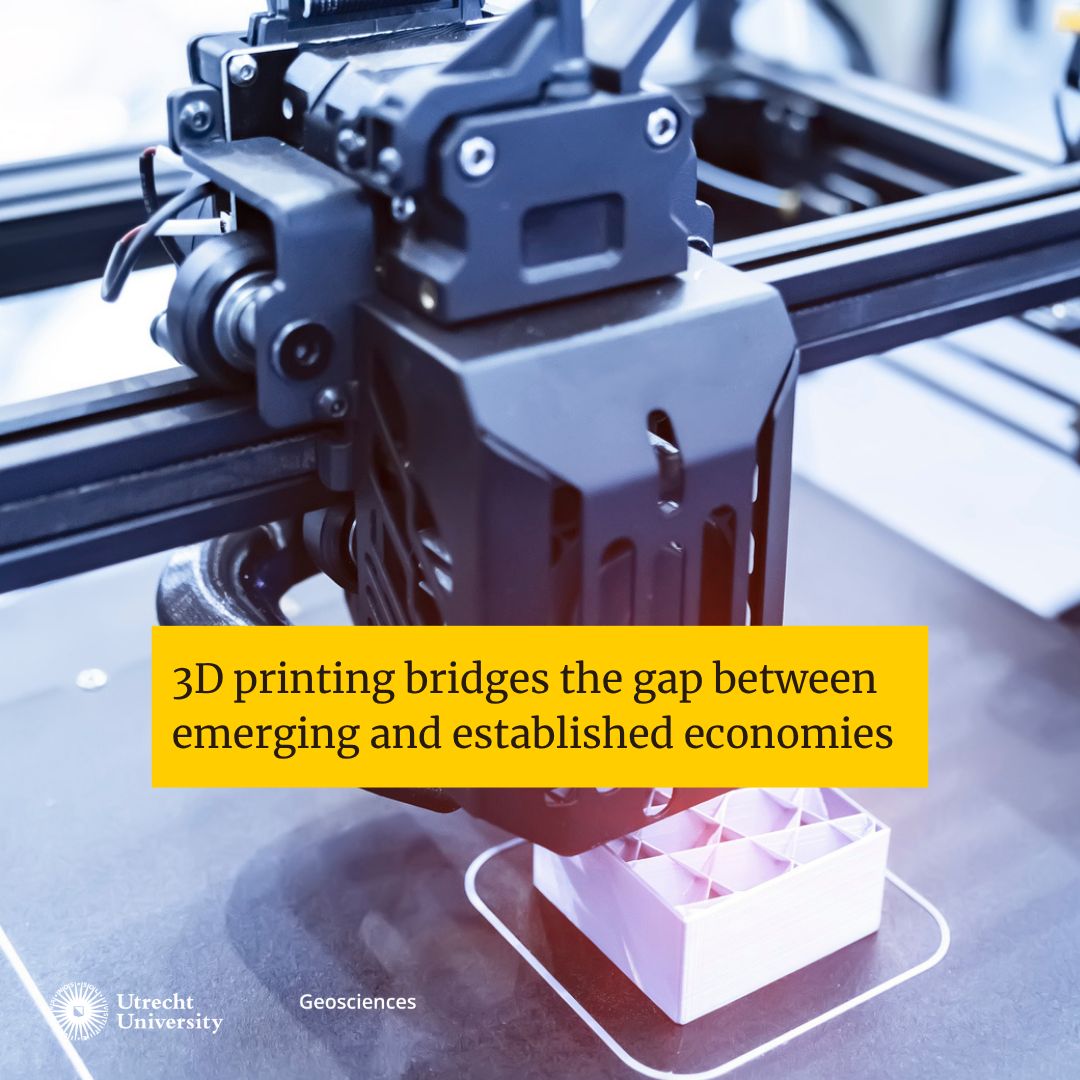
For decades, manufacturing has mostly been controlled by countries with huge factories, lower labor costs, and industrial systems that took years, sometimes decades, to build. But Utrecht University human geographers Nicola Cortinovis and Joric Donnet believe 3D printing could start to change some of that.
In a new study, they found that countries adopting 3D printing technologies are becoming more competitive with traditional manufacturing economies, especially in exports. Their main argument is that additive manufacturing (AM) lowers some of the barriers that have historically made it difficult for developing economies to build strong manufacturing industries of their own.
The findings come from a paper titled 3D Printing and the Geography of Production, published in the journal Techno