Quick Summary
Additional Context
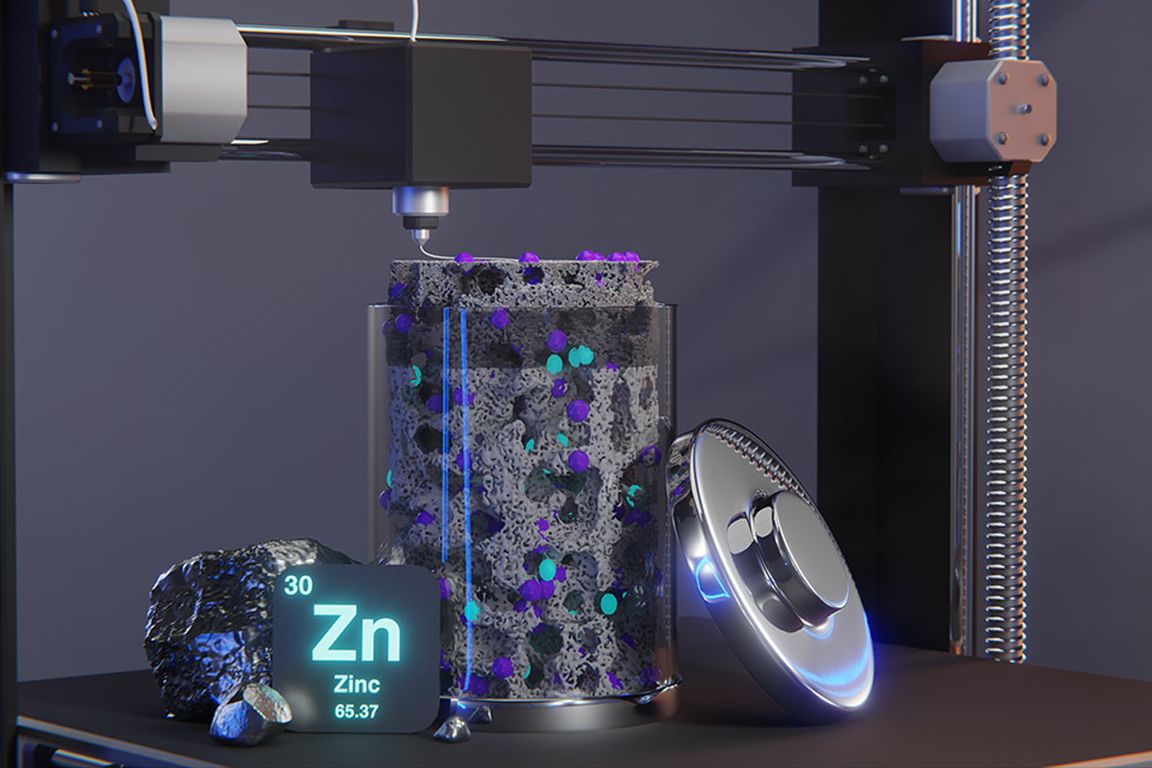
Researchers at the University of California and National Tsing Hua University in Taiwan have reported two 3D printing-enabled advances in energy storage: a zinc-ion hybrid battery that stores more than seven times the charge of comparable devices, and a low-cost, sealed test cell that delivers markedly more reliable lab measurements than the open-beaker setups most battery researchers rely on.
Published in the journal Small, both advances target the same goal: pairing solar and wind generation with storage that charges quickly, lasts for decades and stays affordable. Zinc’s appeal goes beyond abundance, it is simpler to extract and easier to recycle than lithium, advantages that could lower both the cost and the environmental footprint of stationary storage.
“The future of energy storage