Quick Summary
Additional Context
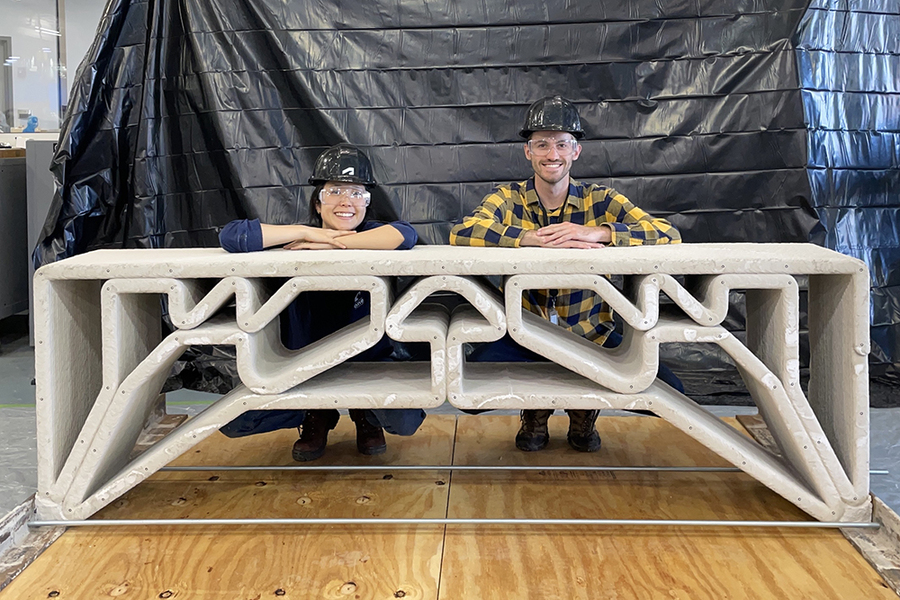
Researchers at MIT have developed a design framework that optimizes concrete structures while accounting for the physical limits of 3D printers. The research also reveals that printer hardware, not concrete, is the key bottleneck to achieving lighter structures.
Concrete is the world’s most-used construction material and one of the single largest sources of carbon emissions. Printing it bead by bead, like a large robotic icing pipe, is one route to a smaller footprint: it removes the labor of pouring into moulds and deposits material only where a structure actually needs it. The catch is that the leanest computer-generated designs are often impossible to print. Engineers use topology optimization to find the strongest shape for the least material, but the delicate, web-like results ignore