Quick Summary
Additional Context
Tungsten, niobium, and tantalum, the metals that will define the next generation of energy and defence technology, share a common challenge: they are notoriously difficult to process and largely sourced from geopolitically sensitive regions.
As the UK moves to reduce its dependence on foreign supply chains for strategic materials, Loughborough University is tackling both problems at once, using electron beam technology (EBM) to process these materials domestically in ways that conventional platforms cannot.
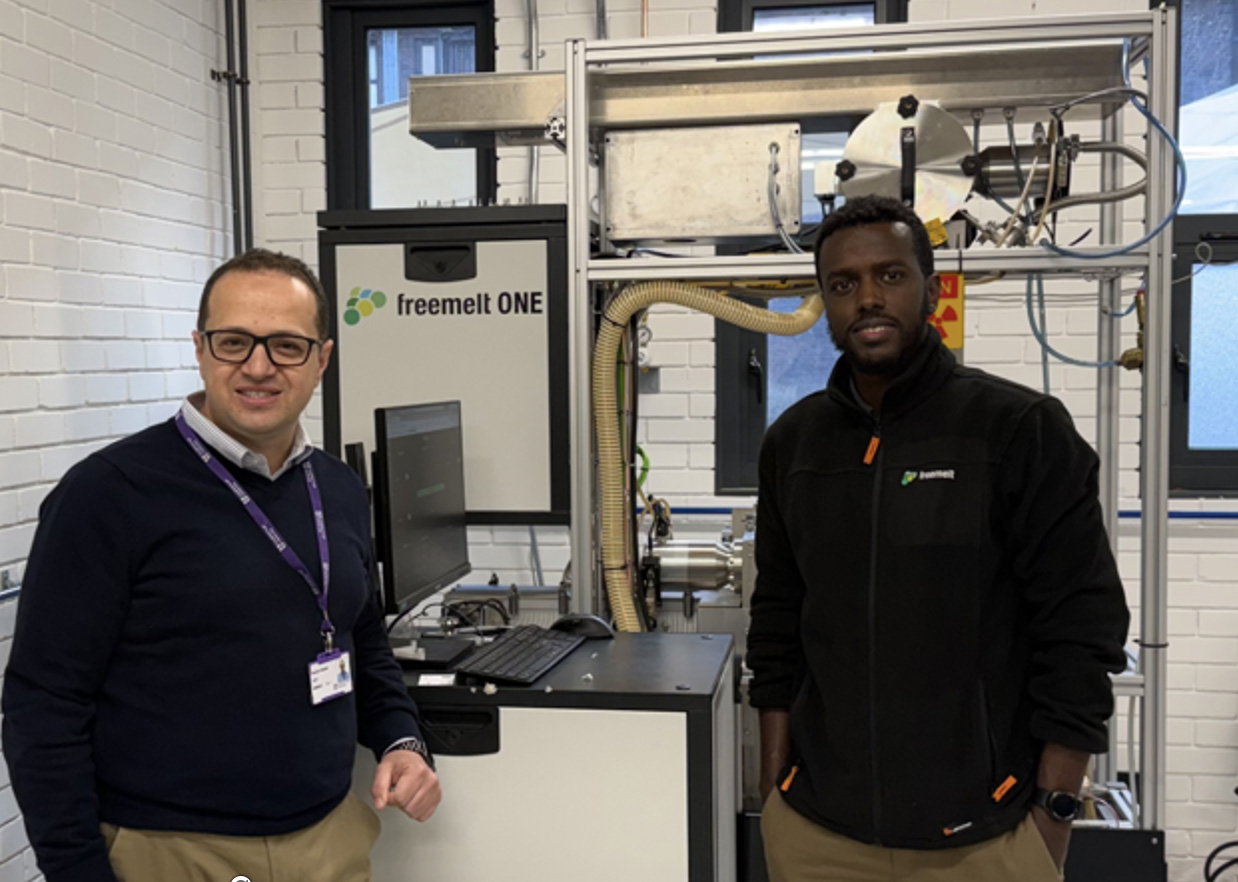
Professor Moataz Attallah (left) and Mohamed Said – service technician at Freemelt. Photo via Freemelt.
The Limits of Laser and the Case for EBM
A decade and a half spent pushing laser-based systems to their limits has given Professor Attallah a precise understanding of what those s