Quick Summary
Additional Context
Soft robotics has a longstanding problem: the materials that make robots flexible and lifelike are notoriously difficult to manufacture into precise, useful shapes. A team of researchers from the Korea Research Institute of Chemical Technology (KRICT) may have found a way around that, using one of the cheapest and most overlooked industrial waste materials available: elemental sulfur.
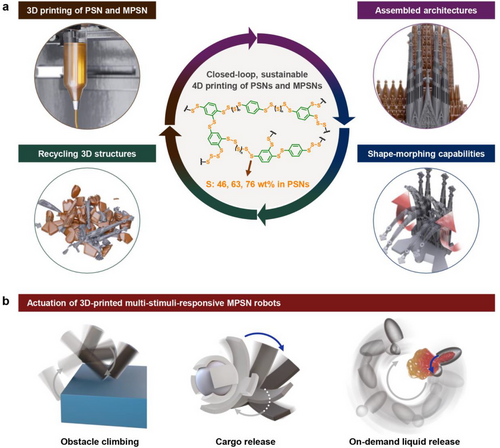
Their approach combines a sulfur-based polymer with 4D printing, a manufacturing method where printed objects can physically change shape over time in response to heat, light, or magnetic fields. The result is a platform capable of producing swimming robots, gripping arms, and self-opening capsules, all from a material that can be melted down and reprinted when no longer needed.
The research team, led by Dr