Quick Summary
Additional Context
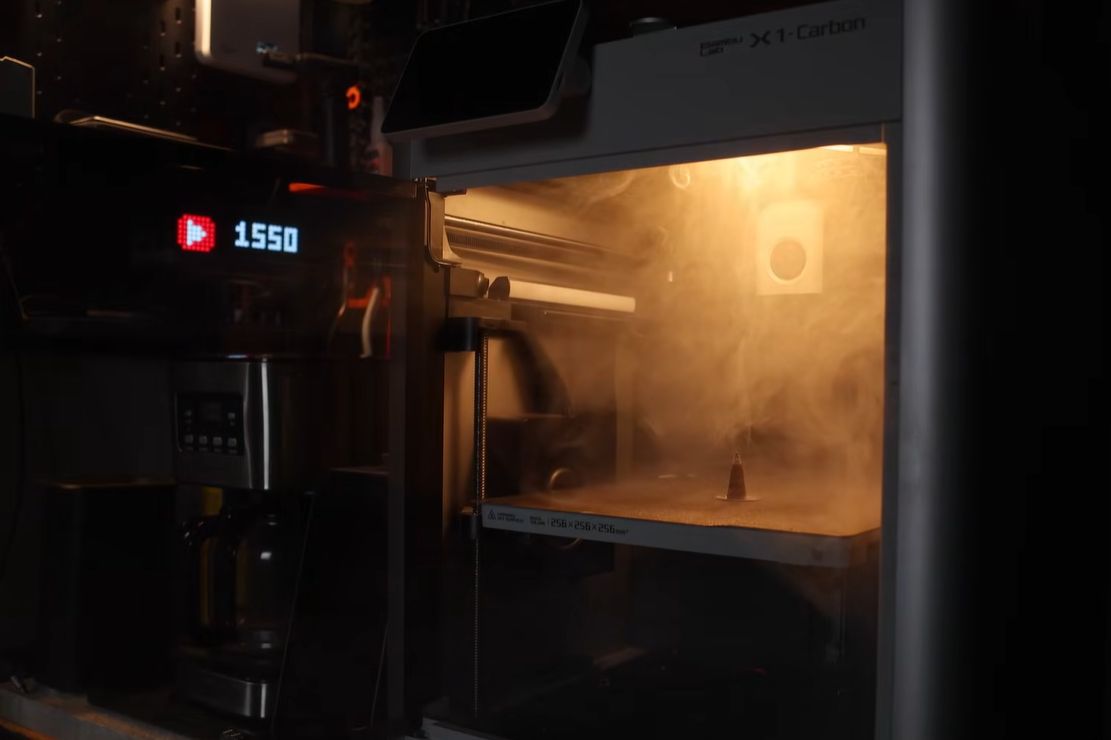
FDM 3D printing is fairly messy on a molecular scale, with the filament being heated up to temperatures high enough to melt it, which produces ultra-fine particles (UFPs) and volatile organic compounds (VOCs) in addition to the new plastic item on the build plate. Recently [Simon Pow] got somewhat worried about this pollution considering that he spends a considerable amount of time in the same room as FDM printers, sharing air.
While there is a lot of context within the topic, it’s notable that even ‘low risk’ PLA already emits formaldehyde, a group 1 carcinogen. Studies like this 2022 one by [Taehun Kim] et al. on formaldehyde, PM10 and PM2.5 show that common filaments like PLA, ABS and TPU score pretty bad here, even compared to the often maligned resin printing, also in the study. Havi