Quick Summary
Additional Context
This article appeared in Make: Vol. 97. Subscribe to Make: for the latest articles.
Computed axial lithography, or CAL, looks different from other forms of 3D printing. A vial of resin rotates while a sequence of carefully computed images are projected through the volume. Where enough light accumulates, a part forms — all at once, in just minutes. There are no layers and no support structures. Introduced by our team at UC Berkeley in 2019, the CAL process was covered by Make: in Volume 88, but now we have a new development: a DIY version you can make at home.
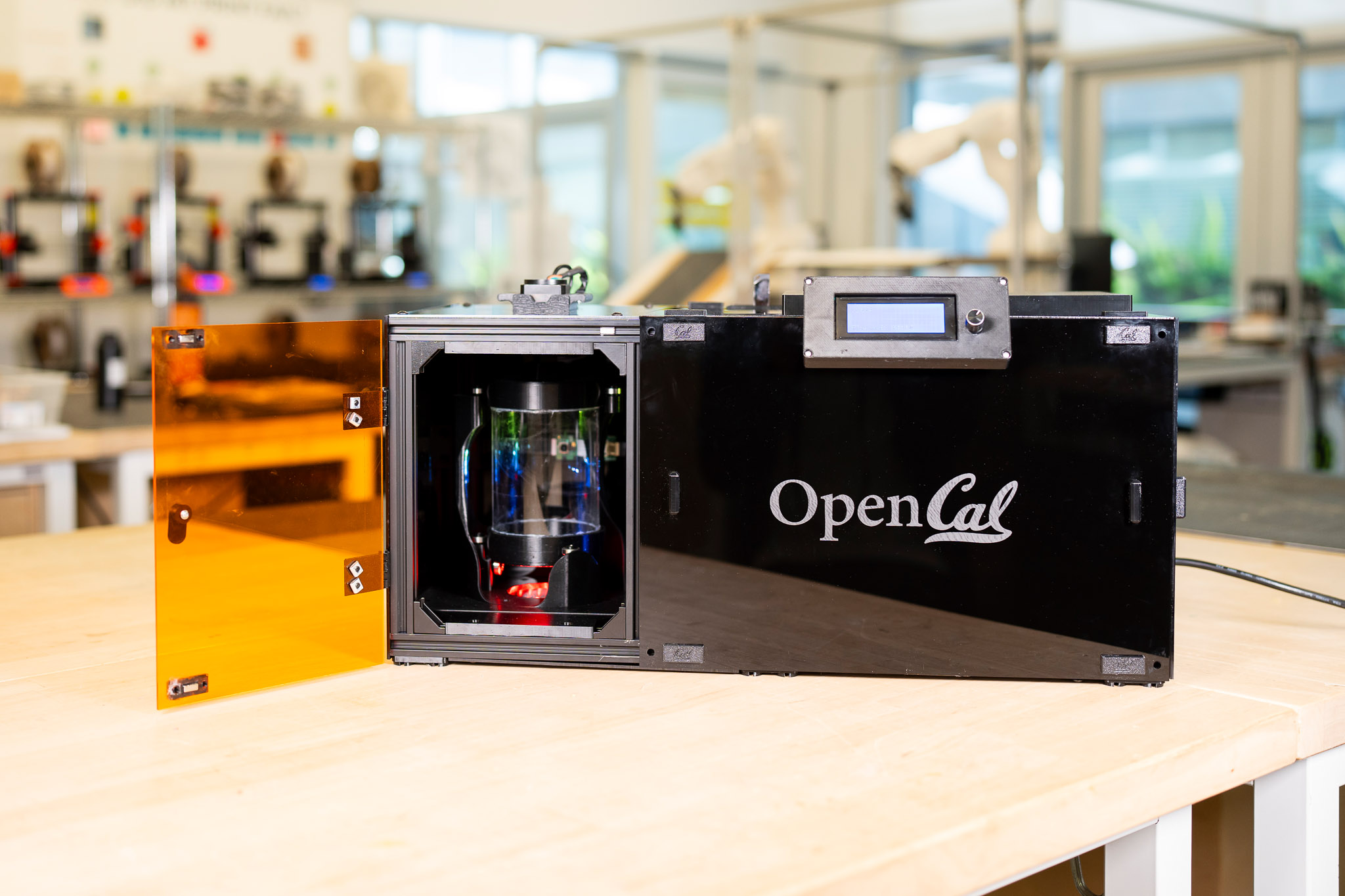
The CAL team have condensed much of our lab setup into a new, accessible open-source platform. OpenCAL is a project designed to let the public build, test, and contribute to the volumetric additive manufacturing (VAM) community.
Th