Quick Summary
Additional Context
A collaboration between researchers at the University of Notre Dame and Harvard Medical School has produced a method for 3D printing vascular networks at resolutions approaching the size of the body’s smallest blood vessels. The work, published in Nature Chemical Engineering, addresses one of the central unsolved problems in tissue engineering: how to build vascular networks fine enough to keep cells alive throughout a larger construct — and in doing so, move bioprinted tissue closer to clinical relevance.
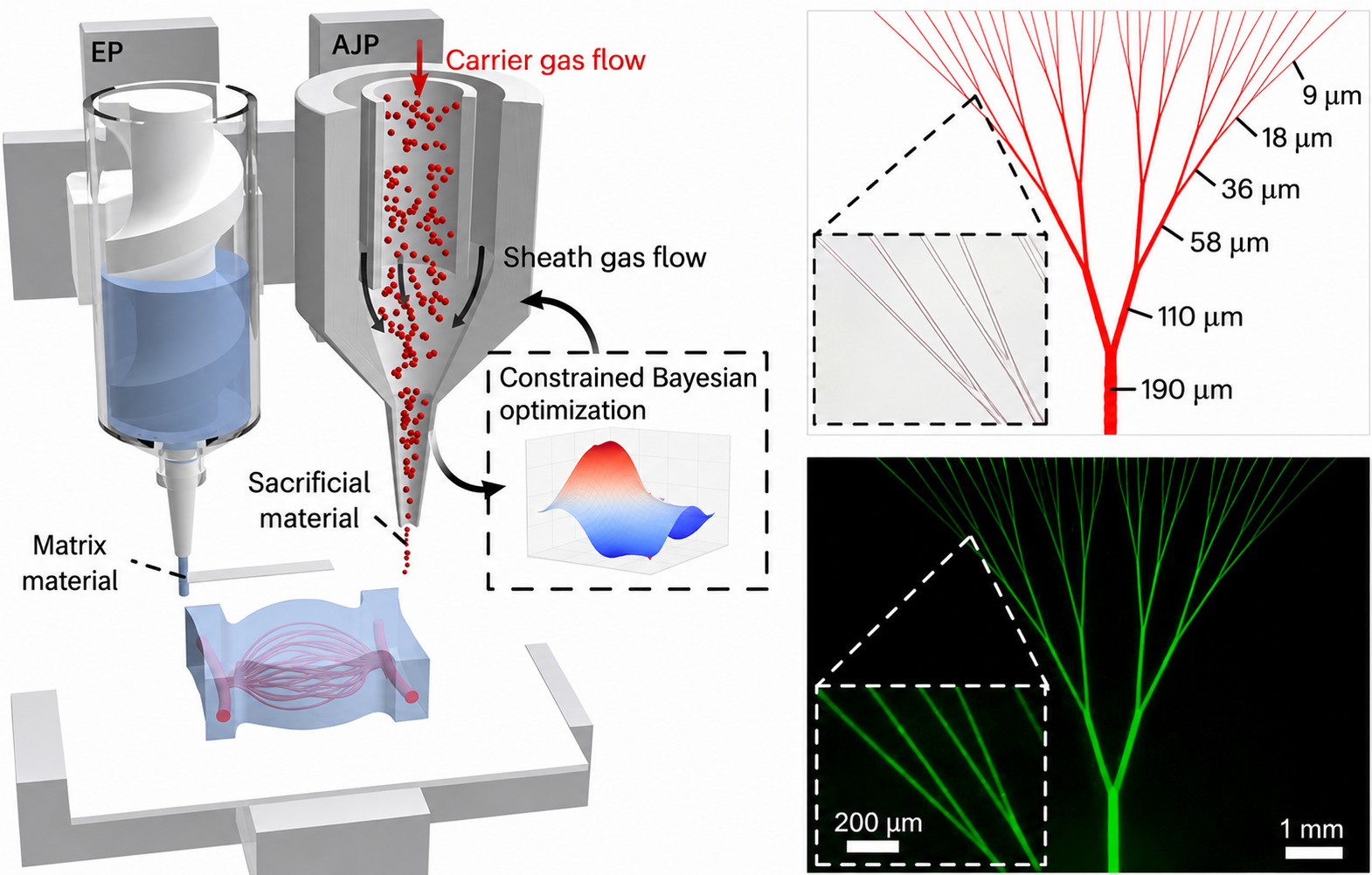
A Custom Printer Combining Two Technologies
The researchers designed a custom-built system that merges extrusion bioprinting with aerosol jet printing, rather than adapting a commercial bioprinter. Extrusion handles larger tissue structures, while aerosol jet printing produces fine sac