Quick Summary
Additional Context
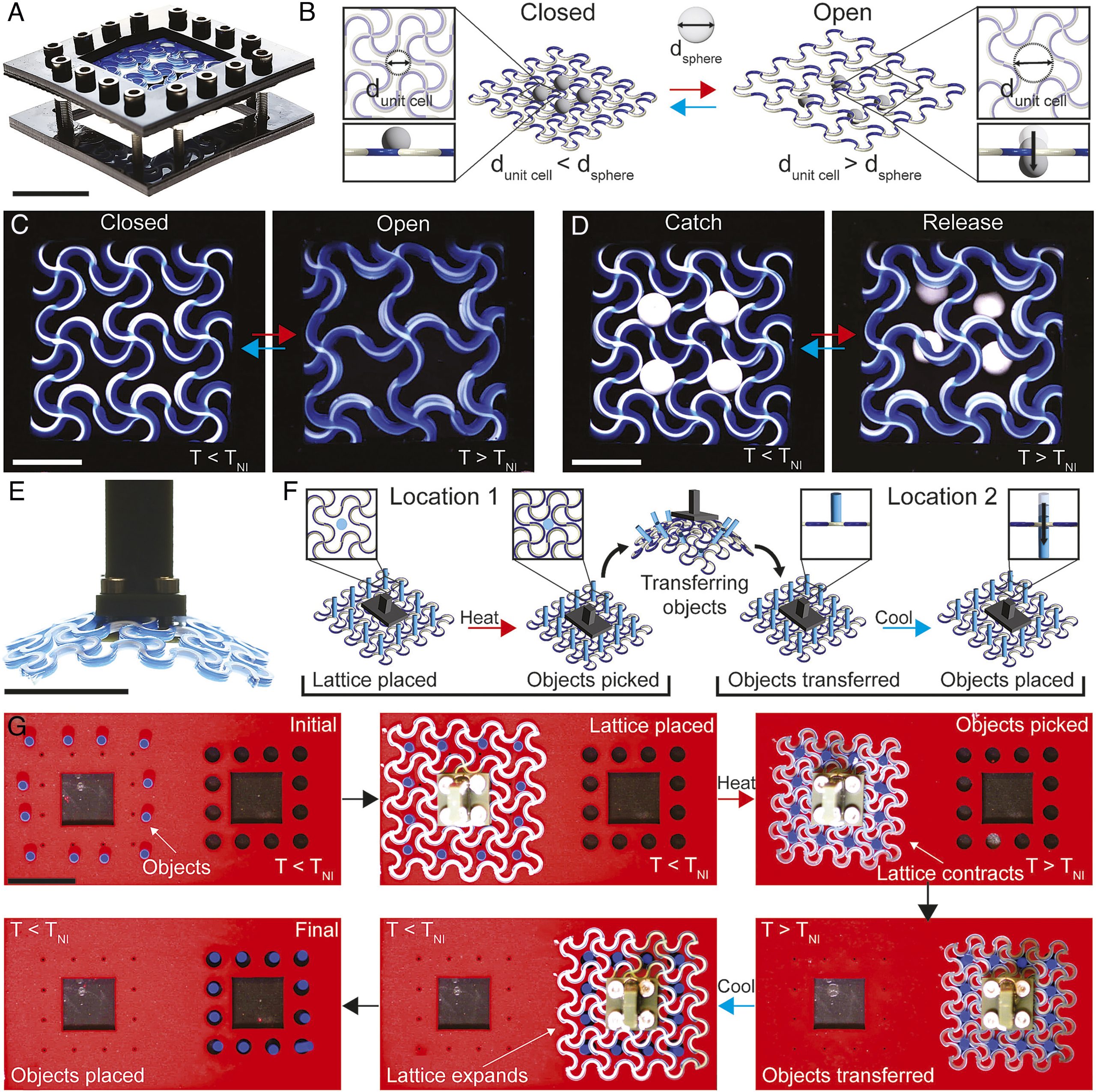
Researchers at Harvard’s John A. Paulson School of Engineering and Applied Sciences have developed a 3D printing method capable of producing hair-thin filaments that bend, twist, expand, or contract in response to temperature, behaving, in essence, like programmable artificial muscles. The work, published in Proceedings of the National Academy of Sciences, comes from the lab of Jennifer Lewis, the Hansjörg Wyss Professor of Biologically Inspired Engineering, with postdoctoral researcher Mustafa Abdelrahman as first author.
The technique builds on a platform developed in the Lewis lab called rotational multimaterial 3D printing, which extrudes two materials simultaneously through a rotating nozzle. One is a liquid crystal elastomer, an active material that contracts along a preferred molec