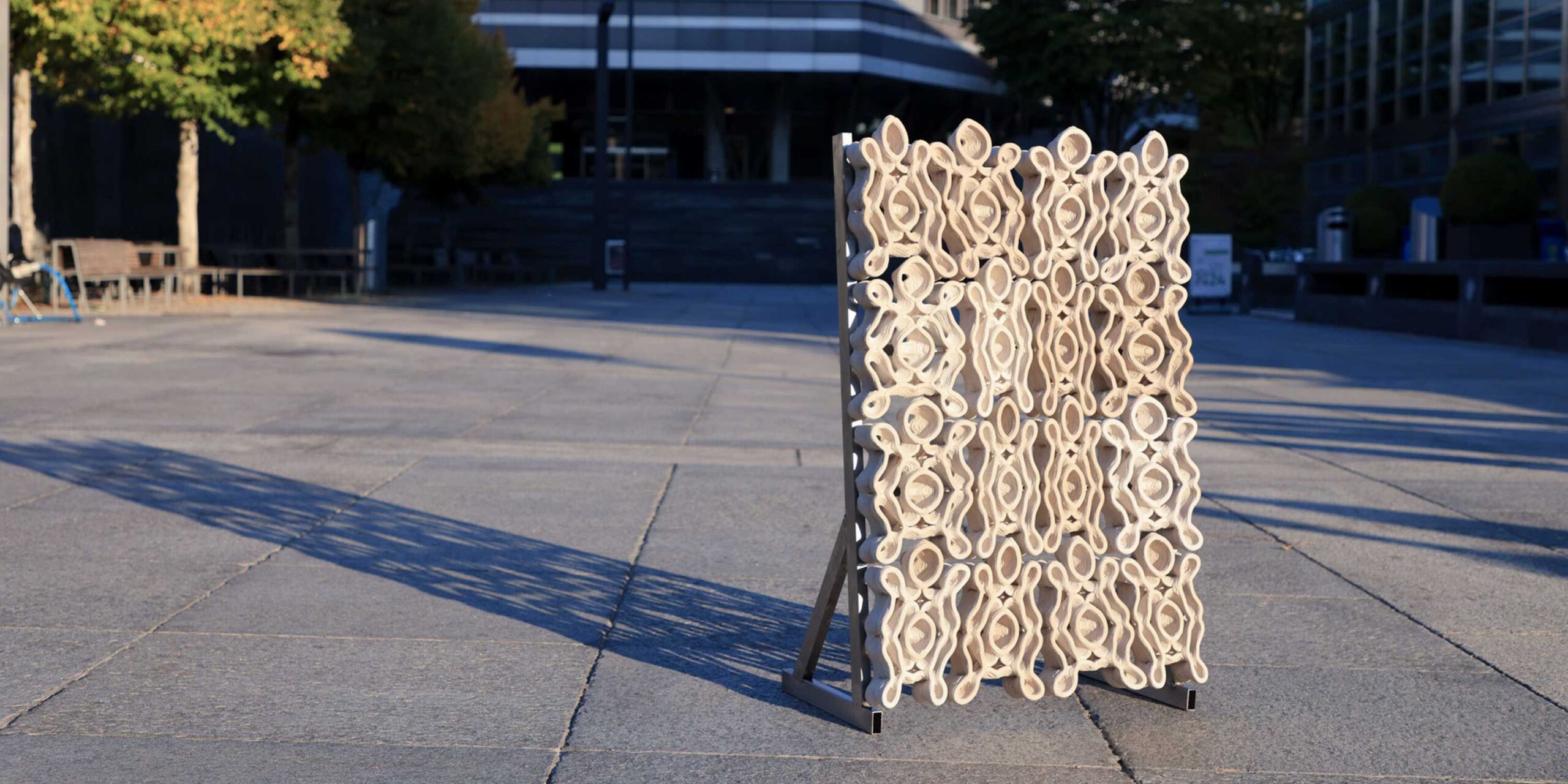
Quick Summary
Additional Context
Additionally, Paez and her team are exploring robotic spraying, where bacteria, sand, urea, and calcium chloride are sprayed layer by layer. The team showcased this at the 2025 Biennale Architettura in Venice for six months. This automated approach could be a promising path toward bacteria-3D printed buildings. Some things will have to be fixed, of course, like safely capturing the ammonia so it isn’t absorbed into the soil. Calcium chloride is also a respiratory irritant, so you probably will want to do this in a central factory or enclosure of some sort while wearing PPE. Happily, the team is looking to mitigate any environmental risks.
Paez considers that “The printing is geared more towards architectural elements, while the spray process is more designed for surfaces.”
For the spray