Quick Summary
Additional Context
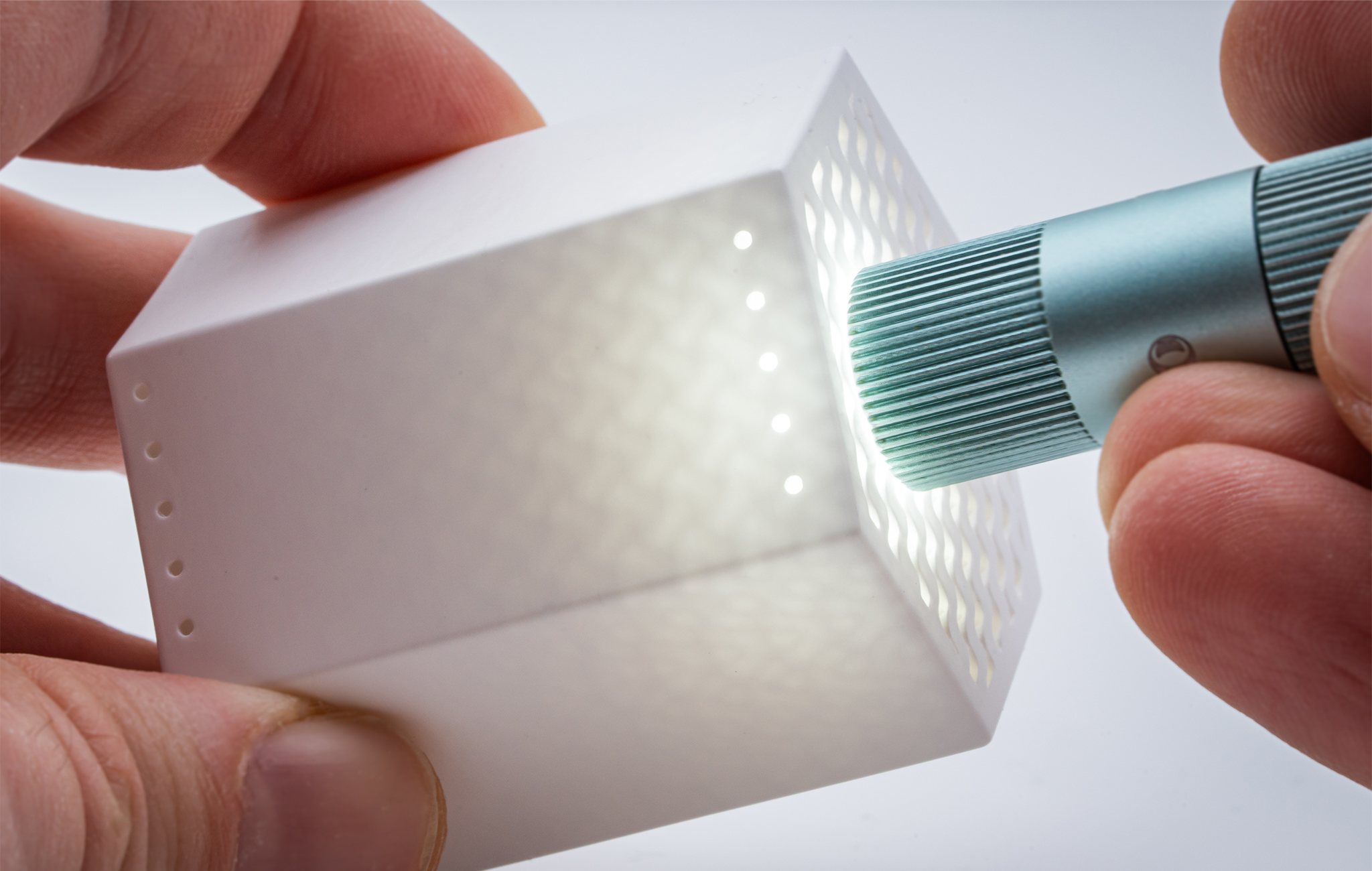
Researchers at the Technical University of Denmark (DTU) have developed monolithic solid oxide fuel cells with 3D printed gyroid architectures made from 8YSZ, reporting power-to-weight ratios of about 1 W g⁻¹. According to the team, conventional planar SOFC architectures typically deliver around 0.2 W g⁻¹, making the new design roughly five times higher on that metric. Led by Professor Vincenzo Esposito at DTU Energy, the project used a recently acquired Lithoz CeraFab unit from Austrian ceramic 3D printer manufacturer Lithoz to produce a lighter fuel cell architecture aimed at hydrogen-powered transportation.
The cells were printed in 8 mol% yttria-stabilized zirconia, one of the most widely used electrolyte materials for SOFCs. Instead of building stacked flat cells, the researchers des