Quick Summary
Additional Context
Researchers from the University of Colorado Boulder and Columbia University have developed a bio-inspired approach to improve the 3D printing of earthen construction materials. Published in Nature Communications, the study introduces a multiscale optimization framework that uses biopolymers to improve the printability, stability, and processing speed of natural earth materials.
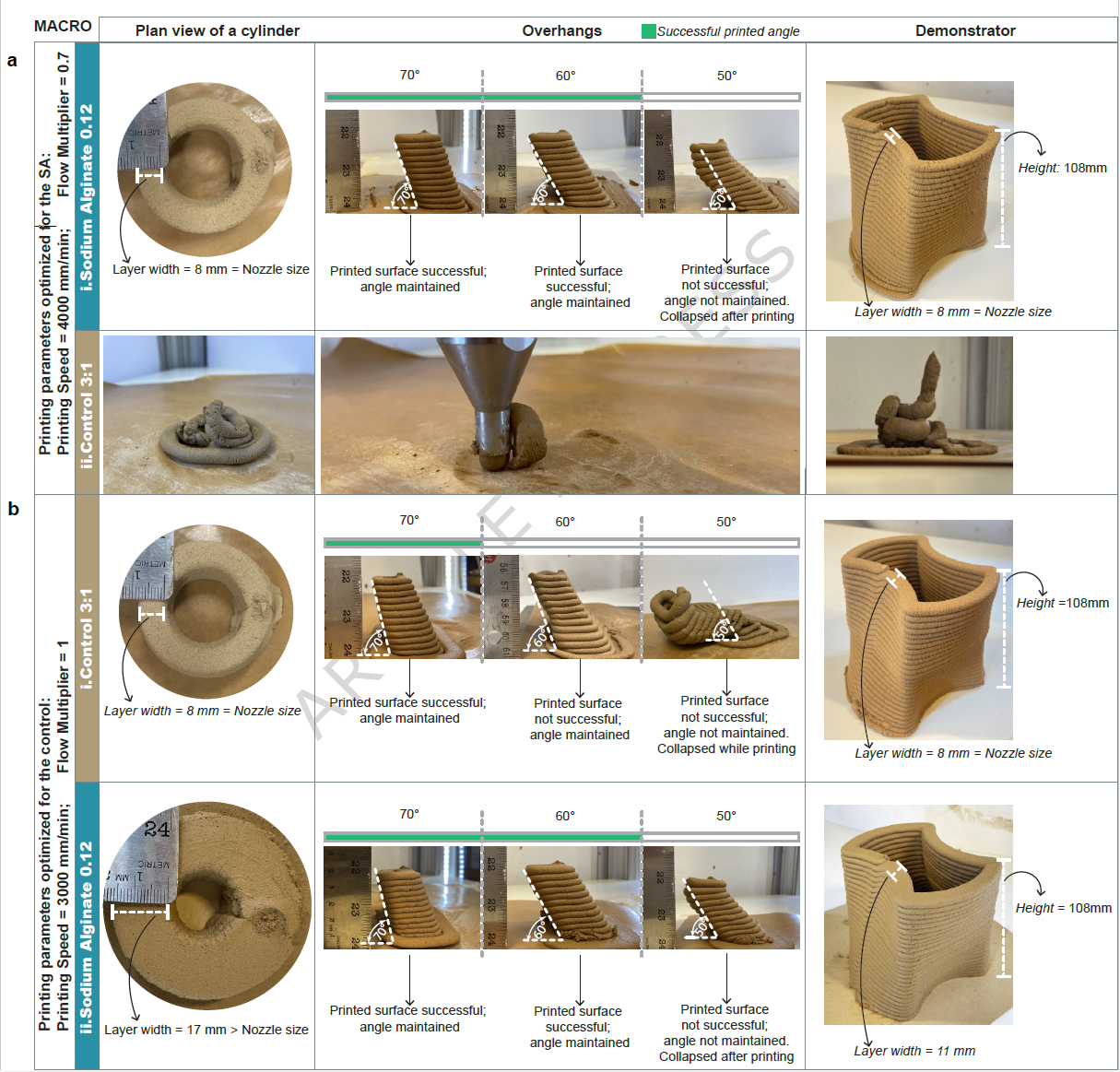
The researchers tested how different biopolymers interact with sand and clay minerals commonly found in subsoil, then scaled the most promising formulations from microscale material analysis to macroscale 3D printed structures. The study identified a sodium alginate-based stabilizer that increased 3D printing speed by 33% and improved structural stability by 10° compared with unstabilized control materials.
Bio-in