Quick Summary
Additional Context
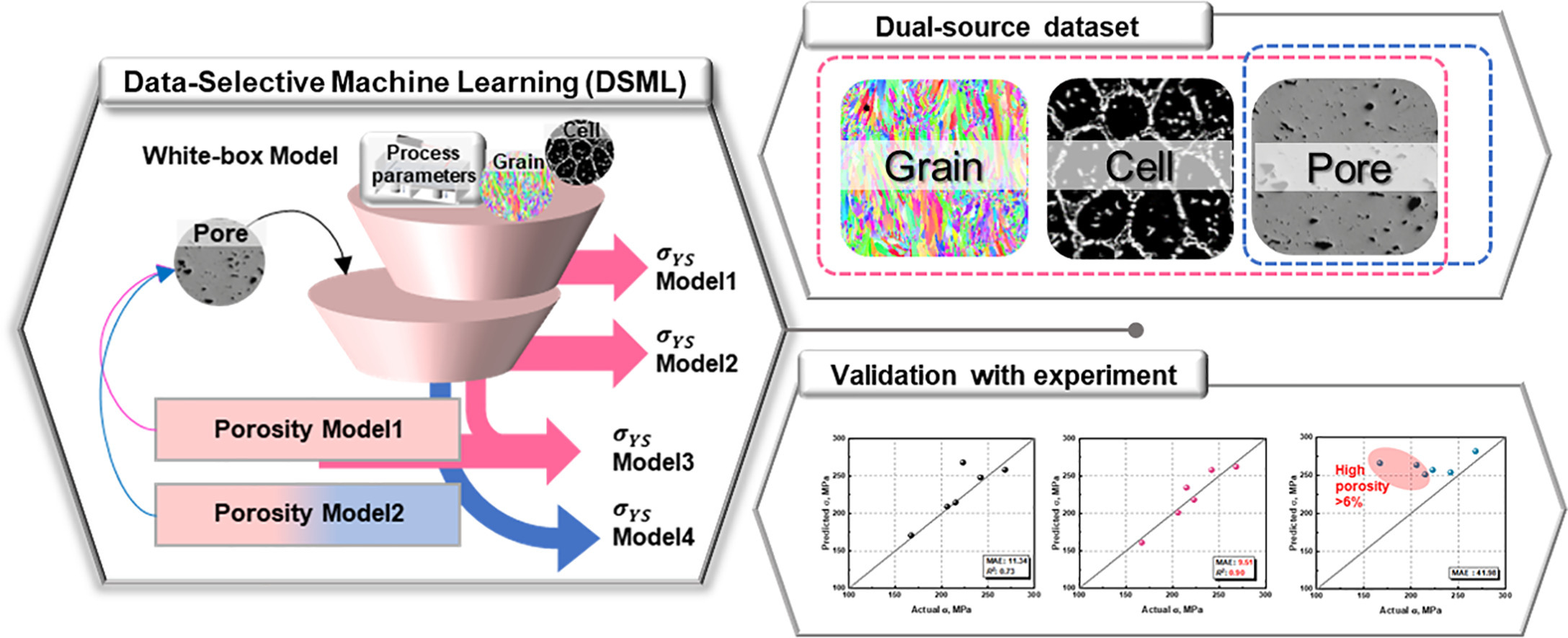
Researchers at POSTECH and the Korea Institute of Materials Science (KIMS) have developed an AI framework that predicts the mechanical strength of metal 3D printed components in seconds, even in the presence of internal defects.
Their work, published in Acta Materialia, offers a model designed not to eliminate flaws, but to work with them, a new strategy that departs from the iterative, resource-intensive testing that currently defines quality assurance in metal parts production.
From left: Senior Researcher Park Jung-min of KIMS, Lee Jeong-ah, a student in the integrated master’s and Ph.D. program at POSTECH’s Department of Materials Science and Engineering, and Professor Kim Hyeong-seop. Photo via POSTECH.
Why Voids Have Been a Stubborn Problem
The challenge it addresses is a persist