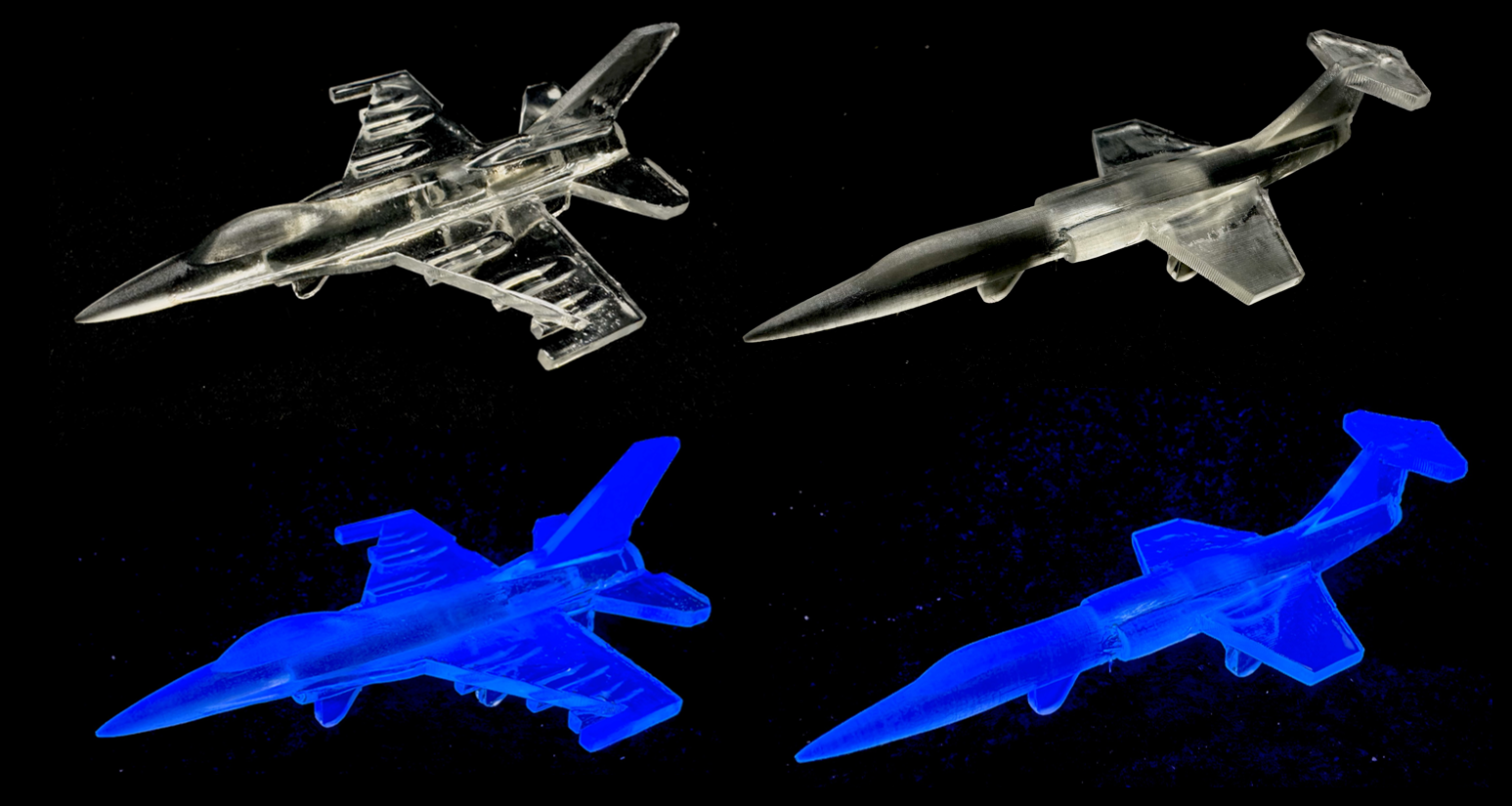
Quick Summary
Additional Context
A project funded by the Department of Energy‘s NNSA DNN R&D program and based at Oak Ridge National Laboratory (ORNL) has turned to additive manufacturing to produce pixelated plastic scintillator arrays, seeking to cut both the time and expense of fabricating these radiation-sensing components.
The contribution from the Air Force Institute of Technology (AFIT), part of Air University, was headed by doctoral student Chandler Moore, who designed, built and programmed a purpose-made 3D printer capable of producing pixelated arrays that detect neutrons and gamma rays, and tell the two apart. Both are forms of ionizing radiation with high national security relevance.
Why Scintillators, and Why Print Them
Ionizing radiation cannot be seen, yet monitoring it is essential for security applicat